
Patient
Voice intake in three languages
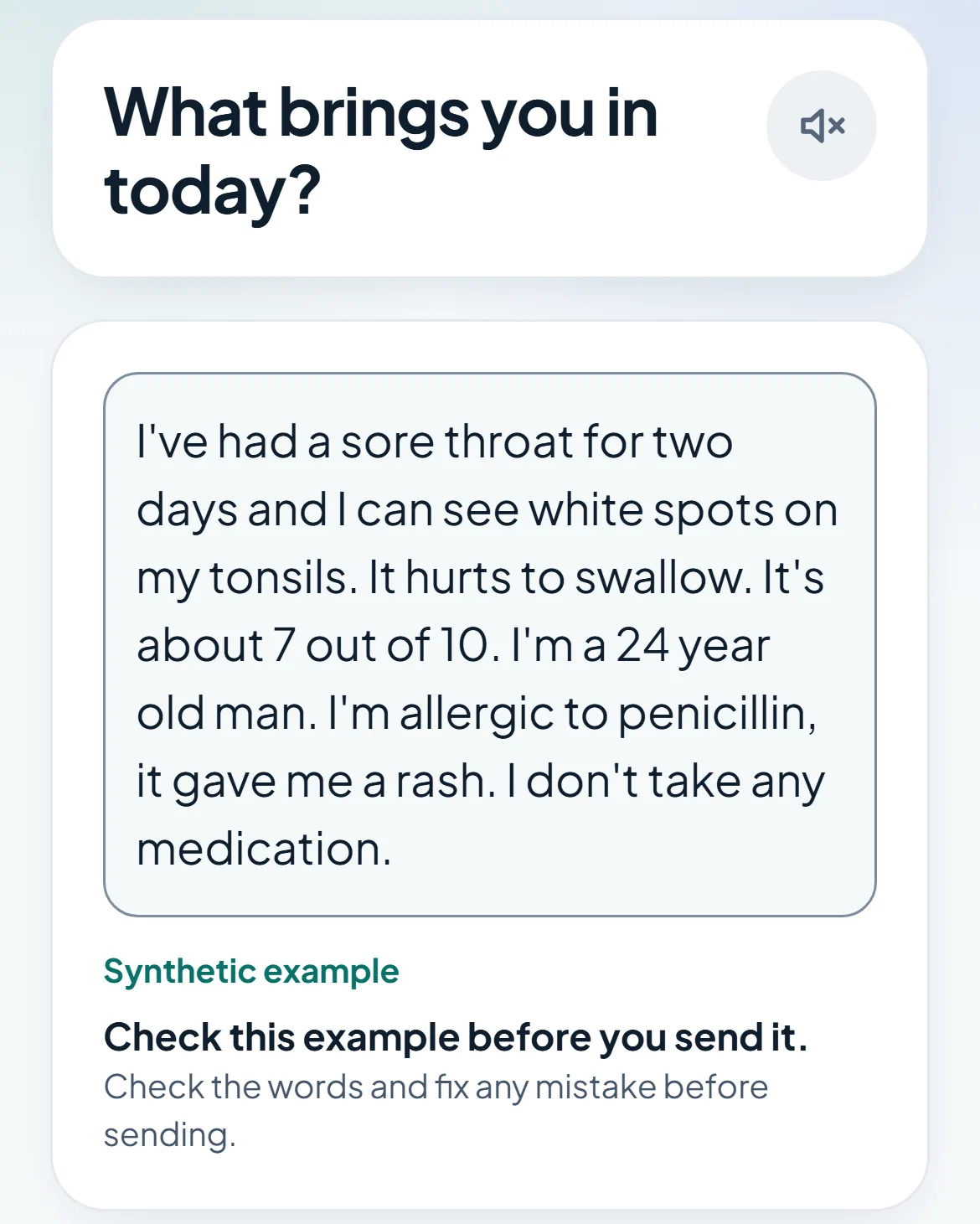
A voice agent reads each question aloud in Thai, Italian or English. The patient checks the transcript before it is sent, and a live status shows when a nurse has read it.
Pre-visit intake for multilingual clinics
Patients tell Fin what brings them in, by voice or text, in Thai, Italian or English. Fin listens and prepares the record while nurses, doctors and pharmacists decide. Every field points back to the patient's own words.
Language picked
ภาษาไทย
Read aloud
How long have you had it?
Built for AMD Developer Hackathon ACT III · Track 2. Names only, no partnership implied. Gemma on AMD is the designed model target; the live label under the hood says what runs today.
Watch
One synthetic visit, from the patient's phone to the pharmacy counter.
How it works
Three steps for every visit. The last one is always a person.
By voice or text, in Thai, Italian or English. Fin reads each question aloud, and the patient checks the transcript before sending.
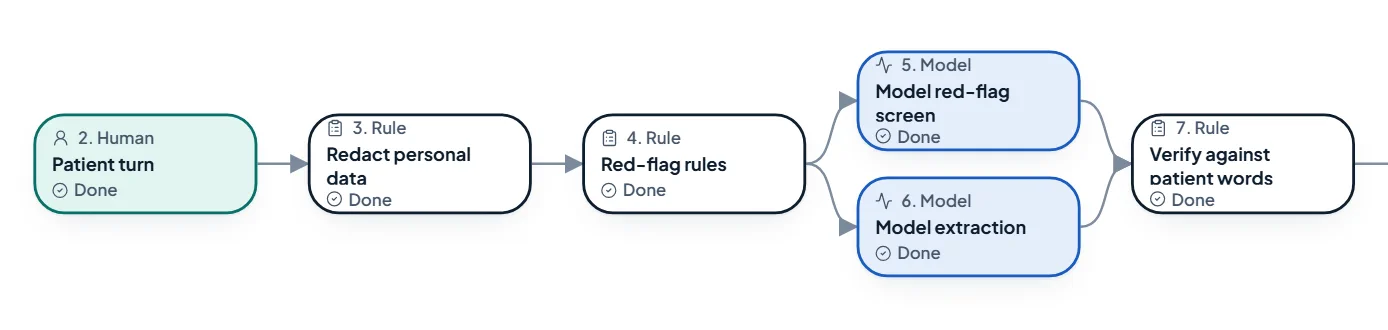
Red-flag rules run as code before any model. Then fields are extracted, and each one must quote the patient, checked by code.
The nurse confirms triage, the doctor signs and orders, and pharmacists verify and dispense. Nothing is final until a clinician approves.
A person decidesSynthetic examples. Each one opens the patient app with a fresh intake.
Features
Each card shows a real MedX screen from a synthetic case.
A voice agent reads each question aloud in Thai, Italian or English. The patient checks the transcript before it is sent, and a live status shows when a nurse has read it.
18 deterministic, guideline-sourced rules read the raw text before any model call. A hit stops the intake and interrupts the clinician screen. No model output can clear it.
แน่นหน้าอก เหงื่อออกเยอะมากเลยค่ะ ร้าวไปที่แขนซ้ายด้วย เป็นมาประมาณครึ่งชั่วโมงแล้ว ผู้หญิงอายุ 58 แพ้ยาซัลฟา กินยาความดันทุกวันRule hit: RF-CHEST-01Chest pain with sweating, radiation, breathlessness, nausea or near-faint
Escalated to a clinician with zero model calls
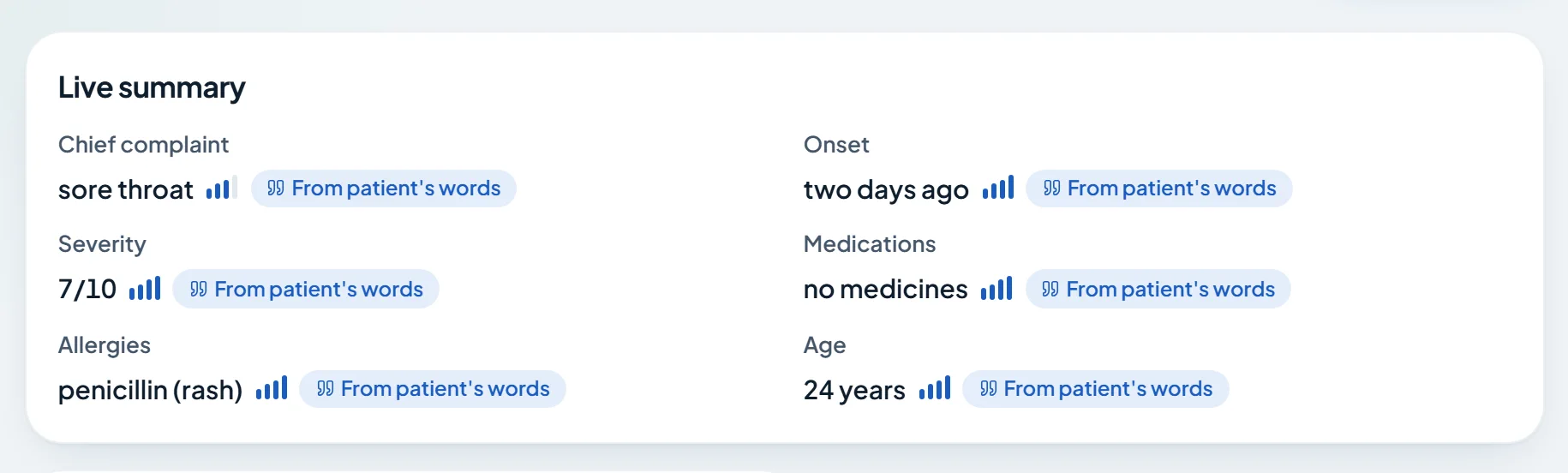
Ambient listening with ask-next and rule-out prompts, and a live summary where every field links to the sentence the patient said.
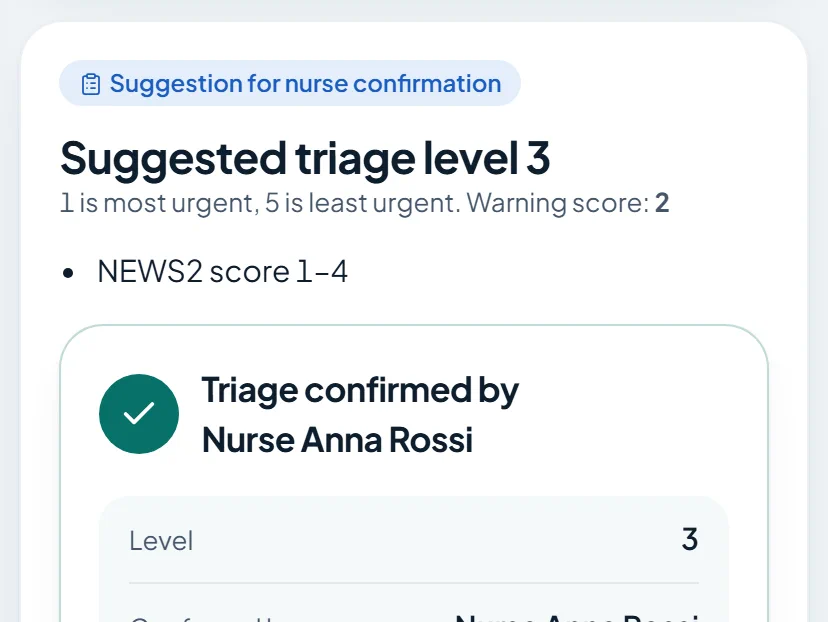
Vitals give a NEWS2-based triage suggestion for adults. The nurse confirms it, or records another level with a note.
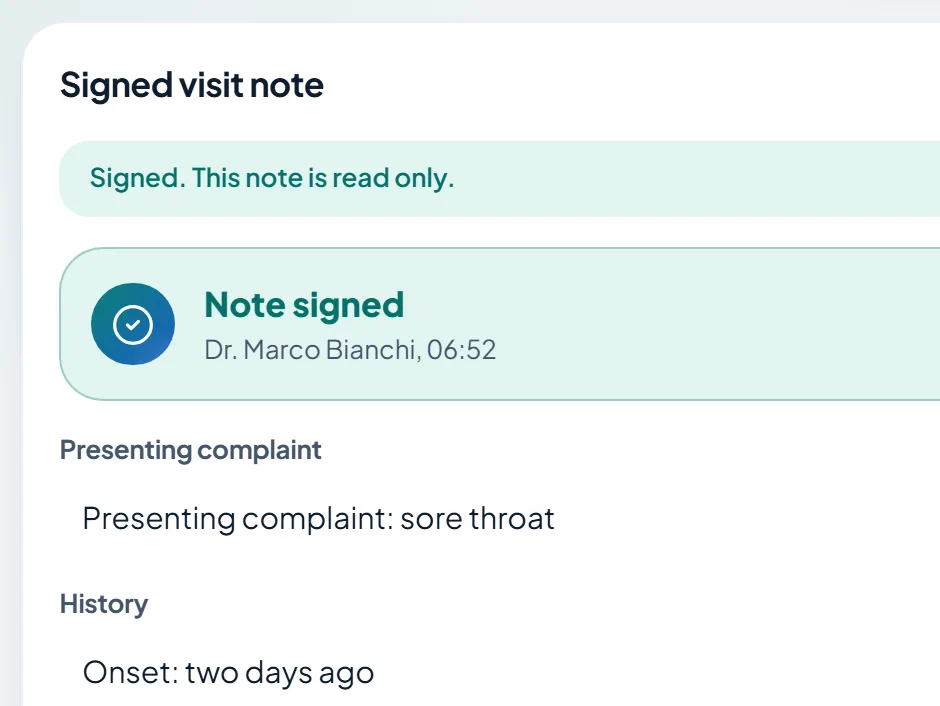
Doctor-only considerations from a fixed curated list, labelled not a diagnosis, with guideline links. The draft note keeps its evidence, and the doctor signs it.
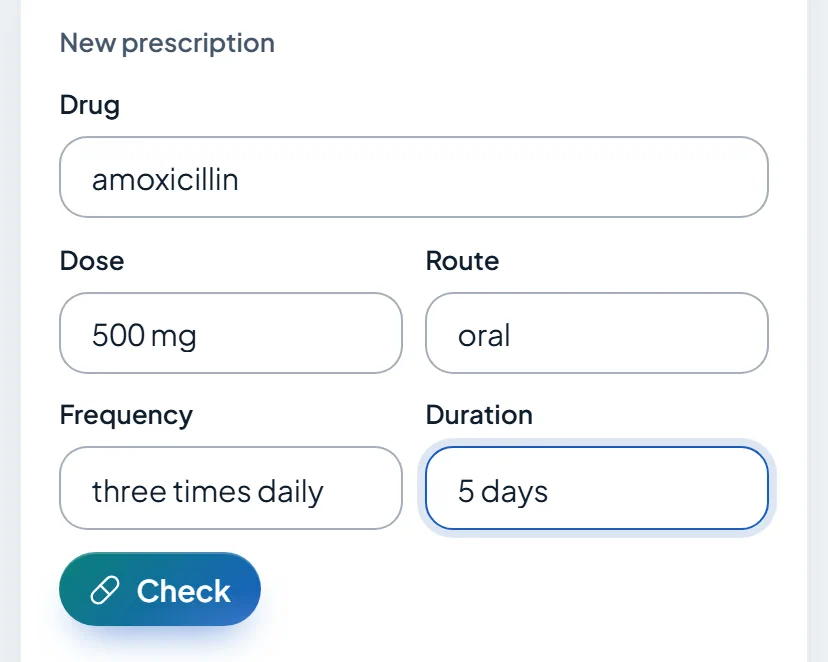
Allergy, interaction, duplicate, pregnancy and dose-range checks from a 59-drug rule set. A high alert needs a written reason.
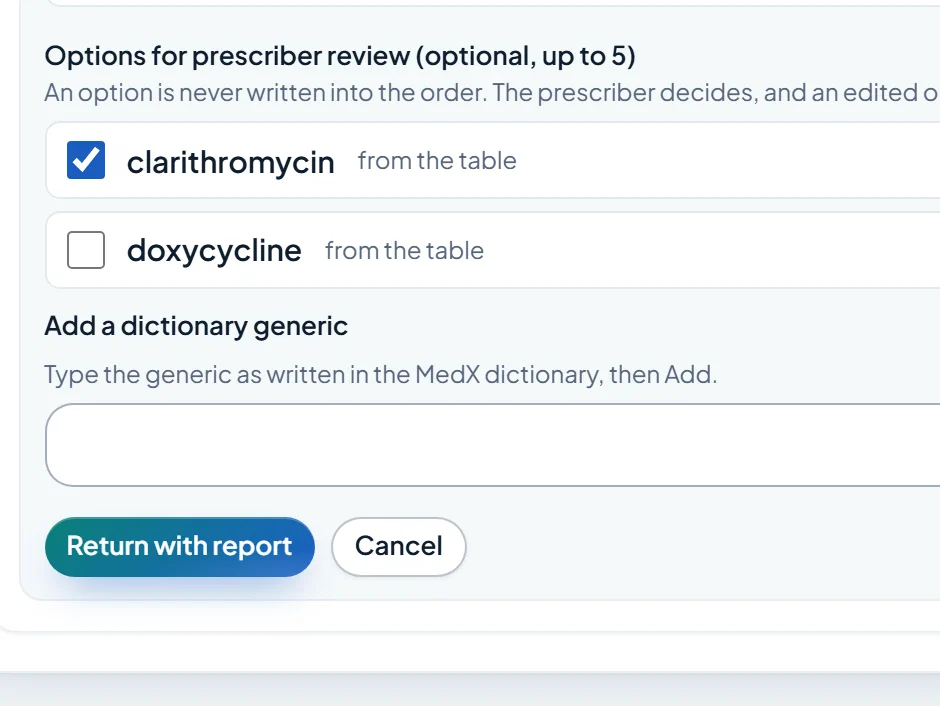
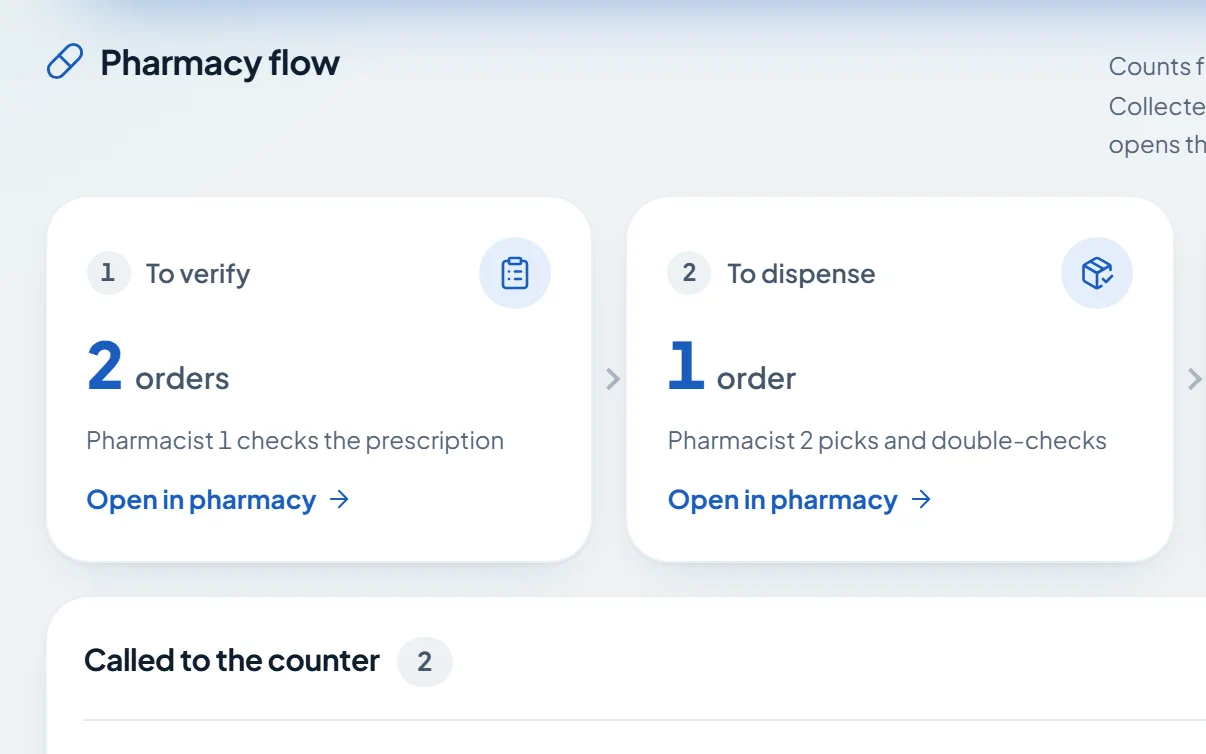
The first pharmacist verifies each prescription or returns it with a note and options for prescriber review. An option is never written into the order.
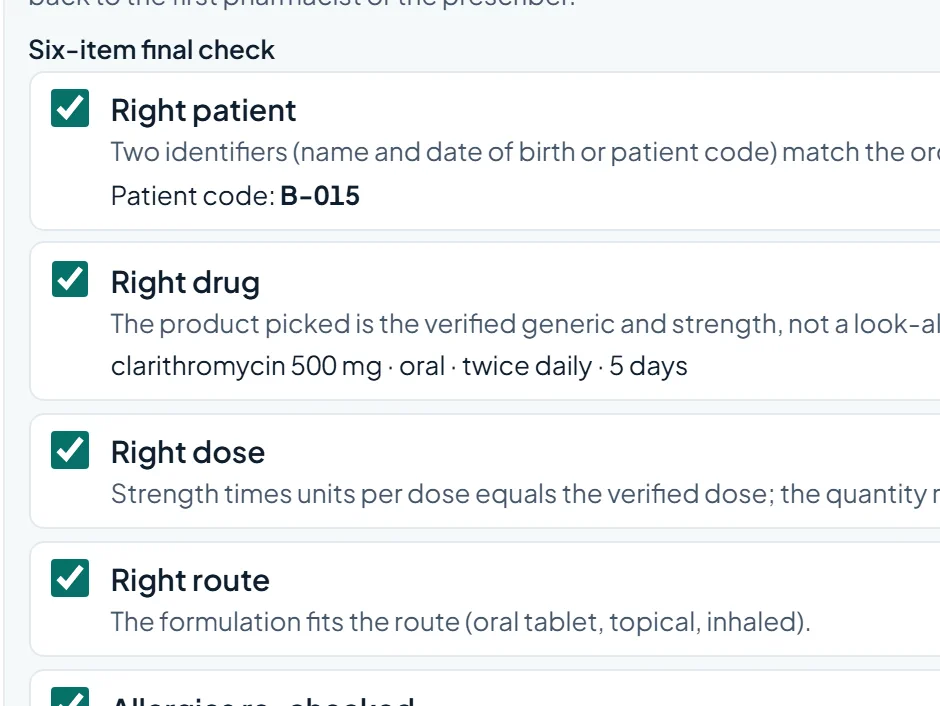
A second pharmacist completes a six-item final check. The pharmacist who verified an order cannot dispense it.
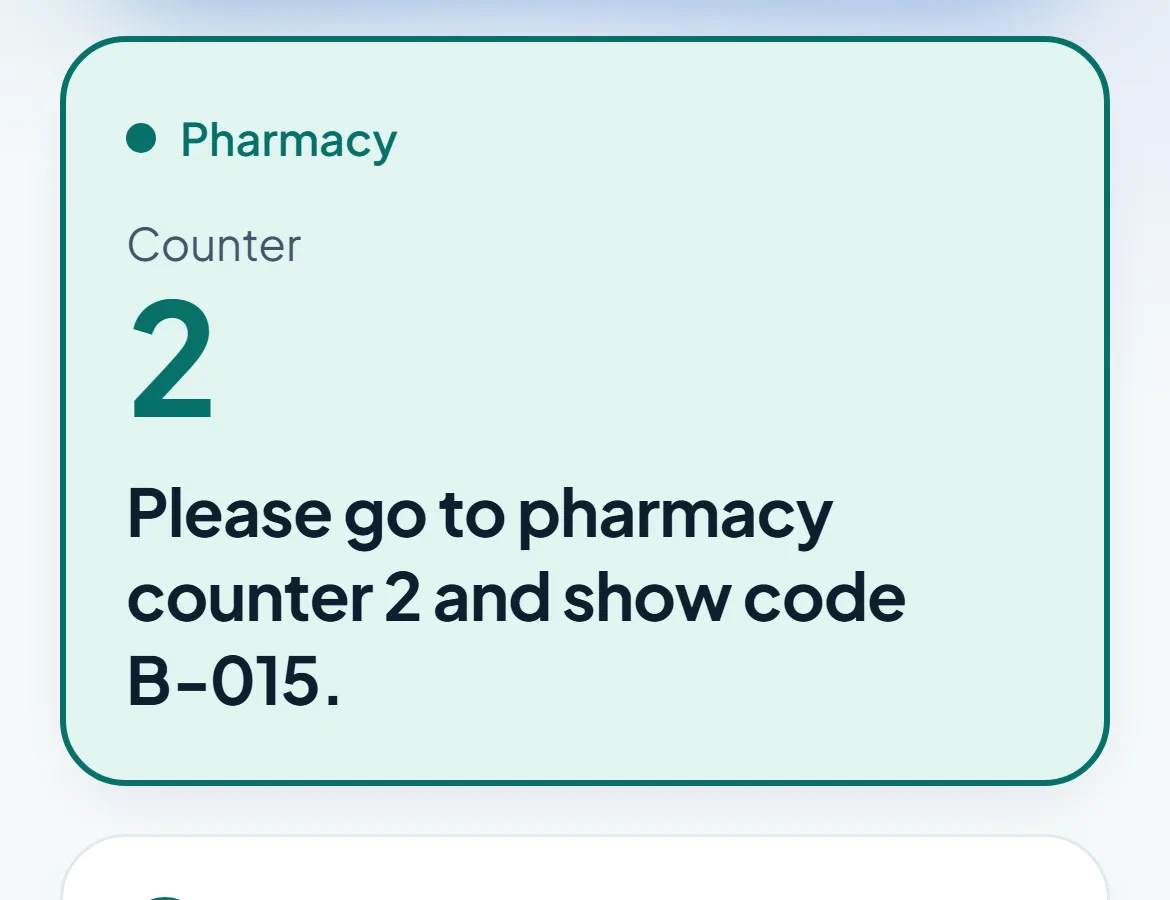
When the medicines are ready, the patient's phone shows the counter and their code. The pharmacist records the collection.
Reviews, edits, orders, dispensing and pickup are recorded with who did what. Nothing is final until a clinician approves.
reviewvitals_recordedtriage_confirmedconsult_note_signedorder_submittedorder_pharmacy_actionorder_dispensedpickup_collectedThe executed graph of how a case was handled: rule checks, model calls, skipped steps and human decisions, with a deterministic replay check.
Queue by urgency, abstain rate, the pharmacy pipeline and an honest model label, refreshed every few seconds.
Safety by design
MedX prepares the record and a clinician approves it. These rules hold in every build, and the tests fail if one breaks.
18 deterministic rules run on the raw text before any model call. An add-only model screen can raise a flag with a verified quote, never clear one.
Every field must carry a quote from the patient's text, checked by code. Without one, the field shows Needs check and is never shown as fact.
A provider error, a schema error or low confidence gives needs human review, never a guess.
Triage is a suggestion the nurse confirms. The AI never proposes drugs or doses. High alerts need a written reason, and every action goes to an append-only audit log.
Why
Published research, not MedX results.
49.1%
of adverse events in limited-English patients involved physical harm, against 29.5% for English speakers, in six US hospitals.
Divi et al., Int J Qual Health Care 2007(opens in a new tab)13 to 59%
of patients had at least one unintended error in their admission medicine list, across six pharmacist-checked studies. Omission was the most common.
Six studies, 2017 to 2026, in the MedX research notes
49.2%
of doctors' office day went to EHR and desk work, against 27.0% on direct face time with patients.
Sinsky et al., Ann Intern Med 2016(opens in a new tab)Demo accounts
Six synthetic people, one synthetic journey. Pick a role and MedX opens a fresh synthetic case at that person's step, signed in as them.
Synthetic data only. Do not enter real patient information.
Phone and web
The patient app runs on the phone; staff work on the web. Both read and write the same synthetic case.
Under the hood
The model label is read live from the server. The chips describe how this build is made.
Model: Reading the live model label
Designed target: Gemma via the hackathon's AMD Token Factory, through an OpenAI-compatible API with JSON-schema output, a per-call timeout and one repair retry.
Limitations
Start as the patient, or step in as the nurse, the doctor or a pharmacist. Every case is synthetic.